
The landscape of identification has shifted dramatically over the last few years. While digital wallets and biometric verification have become the standard for official government business, the niche for physical high-quality cards remains as relevant as ever. Specifically, the novelty ID 2026 market has seen a surge in sophistication, catering to industries that require realistic props and identification replicas for non-official use.
Understanding these items requires a clear distinction between what they are and—more importantly—what they are not.
What is Novelty ID?
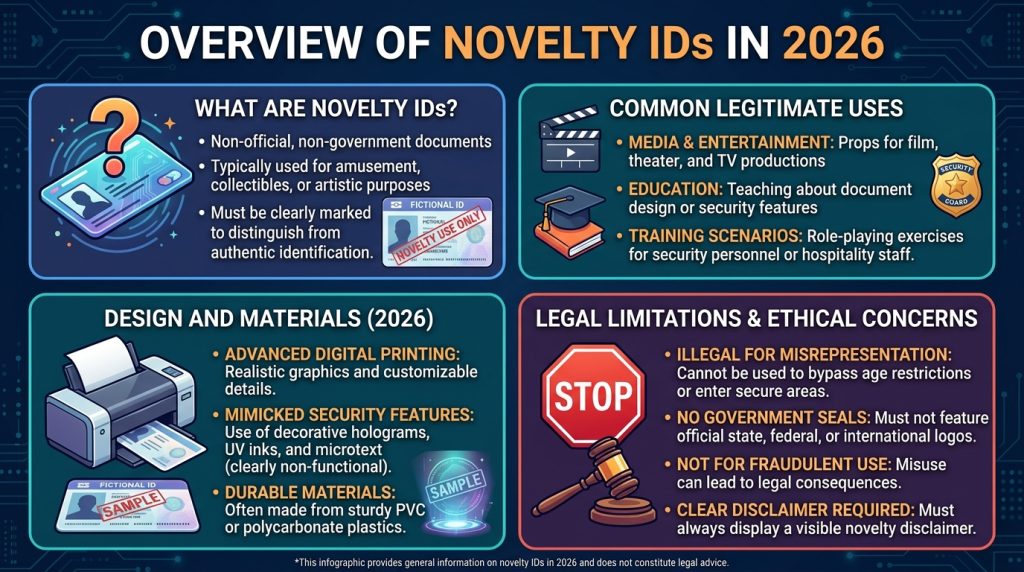
To understand their place in the modern world, one must first ask: what is novelty ID? Essentially, a novelty ID is a non-government-issued document designed to resemble an identification card. Unlike counterfeit documents intended for fraud, true novelty IDs are produced for creative, educational, or professional simulation purposes.
By 2026, the technology used to create these cards has reached a pinnacle of precision. They often feature high-definition printing, tactile elements, and holographic overlays that mirror the aesthetic quality of modern security documents. However, they lack the encrypted microchips and official database integration found in legal state-issued credentials.
Professional and Creative Applications
The primary reason for the continued demand for high-quality replicas is their utility in controlled environments. In 2026, we see three major sectors utilizing these products:
- Media and Film Production: As 8K and ultra-high-definition filming become standard, “cheap” props no longer pass the camera test. Set designers require realistic-looking identification for actors to ensure the audience remains immersed in the story.
- Educational Training: Security personnel, bouncers, and retail staff use these cards during training seminars to learn how to identify different card layouts and tactile features without handling sensitive, real-world data.
- Social Media and Content Creation: With the rise of immersive digital storytelling, creators often use replicas as visual aids for skits or documentaries to maintain a professional aesthetic.
Design and Technological Standards
A novelty ID 2026 is a marvel of modern printing. Manufacturers now utilize Teslin or PVC materials that mimic the weight and “snap” of a real card. Advanced features often include:
- Microprinting: Tiny text that is nearly invisible to the naked eye but clear under magnification.
- UV Elements: Designs that only appear under ultraviolet light, used primarily for artistic or prop realism.
- Tactile Laser Engraving: Raised lettering that provides a professional, high-end feel.
Legal Boundaries and Proper Use
It is crucial to emphasize that novelty IDs are strictly for entertainment and decorative purposes. They are not legal identification documents. Using a replica to misrepresent one’s age, identity, or status is illegal and carries severe consequences.
Reputable providers in 2026 operate under strict guidelines, often including subtle “disclaimer” markings or ensuring the cards are not 1:1 replicas of active government designs. When used responsibly—as a prop for a theater production or a personalized gift—they serve as a fascinating intersection of graphic design and identity technology.
By understanding the purpose and limitations of these items, users can appreciate the craftsmanship involved while staying well within the bounds of the law.
